
New data shows: the risk is far lower than most people think.
Published by Radical Life Studios / MTB Report
If you ask someone who has never visited a bike park, the answer comes instantly:
“Dangerous.”
High speeds, jumps, steep terrain — the stereotype writes itself.
But the numbers tell a very different story.
Recent studies from outdoor sport research groups in Europe and North America reveal that bike parks are not the injury hotspots many assume. In fact, compared to sports with similar speeds and movement patterns — skiing, skateboarding, team sports, even running — bike parks sit surprisingly low on the risk scale.
The reason is simple:
Bike parks are controlled environments.
Trails are designed, inspected, and maintained. Features follow standardized building practices. Warning signs are clear. Riders choose difficulty levels intentionally, not accidentally. Unlike natural trails, where hidden roots, blind corners and random erosion create unpredictable hazards, bike parks eliminate chaos from the equation.
The majority of injuries recorded in parks are minor — abrasions, bruises, occasional sprains. Severe injuries are rare, and when they happen, they often correlate with avoidable behavior: riding above skill level, ignoring trail signage, or skipping protective gear. In structured studies, beginners with rental bikes and full-face helmets statistically suffer fewer serious injuries than advanced riders pushing limits on black lines.
Perhaps the most telling comparison is winter sports. Ski resorts handle far more visitors per day, at higher speeds and with heavier equipment — and yet mountain biking is perceived as the more dangerous activity. Reality says otherwise: the injury rate per visitor is significantly lower in bike parks than in alpine skiing.
Another overlooked factor is trail progression.
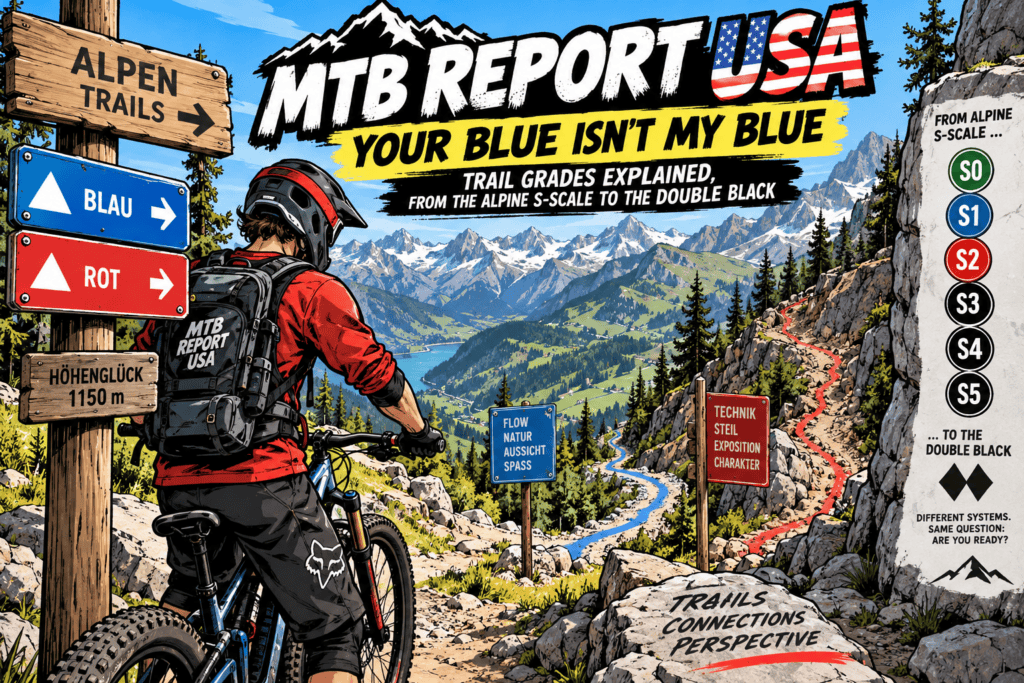
Green, blue, red, black — the system works.
Riders who stay within their comfort zone face minimal risk.
The problem begins when expectation exceeds ability.
That is a human issue, not a sport issue.
Bike parks today invest heavily in safety:
Machine-built berms, predictable takeoffs, controlled landings, first-aid stations, patrollers, signage, fencing, dedicated beginner zones. The infrastructure resembles a small ski resort more than a mountain trail network.
All of this leads to one conclusion:
Bike parks are not inherently dangerous.
People’s assumptions are.
To ride safely, you don’t need luck —
you need the right trail, the right speed, and the humility to know when to roll instead of send.
Outdoor Sports Injury Statistics
https://www.outdoorfoundation.org/
Bike Park Safety Studies & Industry Data
https://www.pinkbike.com/news/
https://www.bike-eu.com/
Comparative Injury Research (Ski vs MTB)
https://www.ncbi.nlm.nih.gov/
https://www.sciencedirect.com/
- Canyon’s Avinox-Powered Spectral:ON CF 9 Is a Value Bomb. Here’s the Fine Print.

- No Winner at Rampage: Right Call, Wrong Plan
- Orbea Wild LT vs. Santa Cruz Bullit: Who Is Really Building Whom?
- Fire Hits Atherton Bikes: What We Know, and Why This Brand Matters
- Focus Quits the Non-Electric Mountain Bike. Is the Entry-Level Hardtail Next?
- Riding in Spain This Winter? The Rules Just Changed
- Nobody Stole the Bike Industry. We Sold It.
- 32-Inch Just Won a World Title. Here Is What It Actually Means for Your Next Bike.
- Saalbach Hinterglemm: The Valley That Sport Brought Back to Life
- Riding Through Hunting Season: How to Stay Safe on the Trail
- The 4680 Cell Is Coming to E-Bikes. And It Will Turn Them Into Mopeds.
- Specialized Invented the Light Enduro eMTB — Then Walked Away. Orbea’s Picking It Up.




No responses yet