
Production is back, workshops are full, and e-bike tech becomes the new bottleneck.
Published by Radical Life Studios / MTB Report
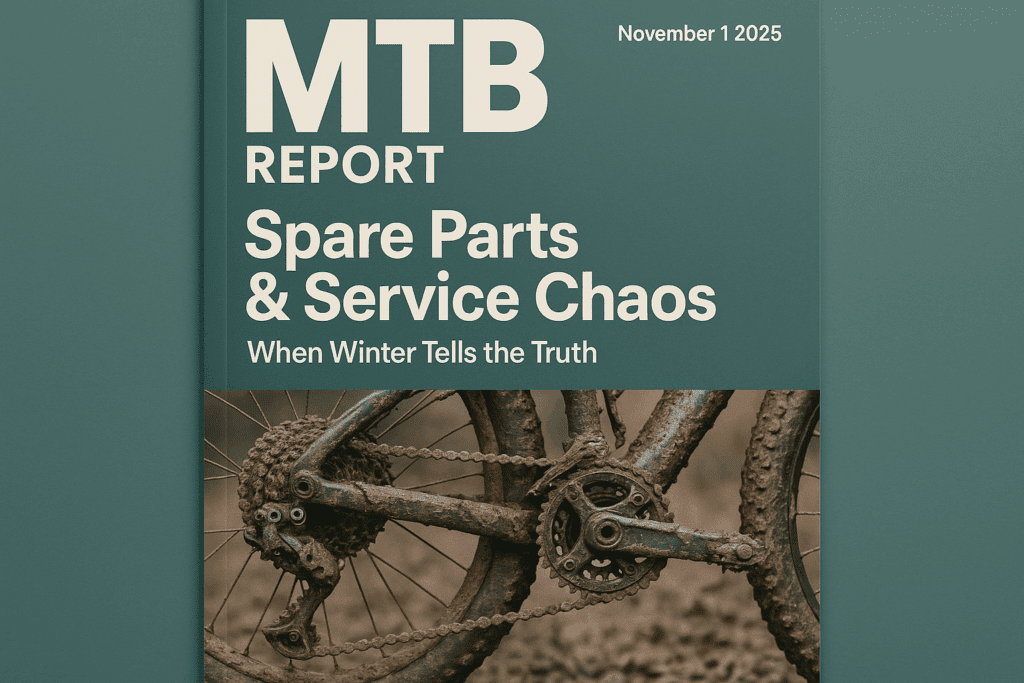
The worldwide spare-parts crisis of the pandemic years is over. Components are back on the shelves, supply chains are stable, and the bicycle industry shows clear signs of recovery according to market reports and industry associations.
Yet riders still wait weeks for motor repairs, software diagnostics or suspension service.
The shortage hasn’t disappeared — it has simply shifted.
Not in factories, but in workshops.
The data tells a simple story: e-bike sales keep rising, and every new motor on the trail is a motor that will eventually need diagnostics, updates or replacement. At the same time, industry groups are trying to stabilize the relationship between manufacturers and retailers. In late 2025, European trade associations introduced updated guidelines on fair supply contracts and clearer rules on what workshops are actually allowed to modify on e-bikes.
On paper, this should ease pressure across the market. In reality, three things stand in the way: time, training and technical complexity.
While component supply has improved, the number of experienced e-bike technicians has not grown at the same pace. Major motor manufacturers train thousands of dealers every year, but the curve of training simply can’t keep up with the curve of demand. Traditional mechanics excel at wheels, brakes and drivetrains — but diagnosing firmware conflicts or tracking down sensor errors is a very different skill set.
Another part of the problem lies in the diversity of systems still on the market. Riders with older Bosch, Brose or other platforms often depend on specialized service partners — most of whom are booked out for weeks. Community reports across multiple forums tell the same story: stable supply, unstable service.
And then there’s the human factor: the pandemic taught riders to stock up. Many bought spare drivetrains, forks or wheels “just in case”, and a non-trivial number of parts ended up in basements rather than in workshop inventory. The market recovered, but the behavior stayed — and that doesn’t help availability where it’s actually needed.
The contradiction of 2026 is obvious:
Parts are available, yet service capacity is maxed out.
Warehouses are full, but workshops cannot process demand at the speed riders expect. Component production has normalized, but the service chain behind it has not.
For riders, the solution is less dramatic and more practical: plan ahead.
Book inspections in spring rather than mid-season. Expect electronic repairs to take longer than mechanical ones. Keep essential wear parts at home — without falling back into pandemic-era panic buying.
The industry is responding. Updated legal frameworks, fair-supply guidelines and expanded training programs are steps in the right direction. But whether 2026 becomes the year the system truly stabilizes will depend less on manufacturing and more on the availability of qualified hands.
The parts exist.
The question is simply: who installs them — and how long will you wait?
- A German Town Takes Over Its Ski Lift. Now Its Bike Park Needs an Operator

- Canyon’s Avinox-Powered Spectral:ON CF 9 Is a Value Bomb. Here’s the Fine Print.
- No Winner at Rampage: Right Call, Wrong Plan
- Orbea Wild LT vs. Santa Cruz Bullit: Who Is Really Building Whom?
- Fire Hits Atherton Bikes: What We Know, and Why This Brand Matters
- Focus Quits the Non-Electric Mountain Bike. Is the Entry-Level Hardtail Next?
- Riding in Spain This Winter? The Rules Just Changed
- Nobody Stole the Bike Industry. We Sold It.
- 32-Inch Just Won a World Title. Here Is What It Actually Means for Your Next Bike.
- Saalbach Hinterglemm: The Valley That Sport Brought Back to Life
- Riding Through Hunting Season: How to Stay Safe on the Trail
- The 4680 Cell Is Coming to E-Bikes. And It Will Turn Them Into Mopeds.











No responses yet