Veröffentlicht von den Radical Life Studios / MTB Report
by Robert Langer
Evergreen guide, relevant every hunting season
Fall is the best time of year to ride. Cool air, no bugs, leaves crunching under your tires. It’s also when a lot of the woods you ride fill up with people carrying rifles. Here’s what actually happens out there, what changed recently, and how to keep riding all season without betting on luck.
Hopkinton, New Hampshire, November 2017
A few weeks into deer season, a 27-year-old woman was riding her mountain bike on Hall Road near Elm Brook Park, on U.S. Army Corps of Engineers land where hunting is legal. Around 4:20 p.m., shortly before dark, she heard a shot and realized she’d been hit.
According to New Hampshire Fish and Game, the 34-year-old hunter said he was shooting at a deer and failed to see her on her bike in the background. An official on scene said she was wearing brightly colored clothing. Her injuries were not life-threatening, and she was released from the hospital the same day.
Two takeaways. First, the responsibility for that shot sits entirely with the shooter. Every hunter safety course teaches the same rule: know your target and what’s beyond it. Second, being right doesn’t protect you from someone else’s mistake. Bright clothes helped, but dusk and a hunter locked onto a deer still won.
| The shot is always the shooter’s responsibility. Your job is to make that mistake as hard to make as possible. |
For perspective: state wildlife agencies consistently point out that hunting accidents involving non-hunters are very rare. This isn’t a reason to stay home. It’s a reason to ride smarter from October through December.
Public land means shared land
If you ride in a national forest, you’re almost certainly riding in hunting country. From Pisgah to the Ozarks, trails on public land generally stay open during hunting season, and hunters have every right to be there too. The Forest Service’s own safety pages say it plainly: be aware of hunting seasons, don’t assume hunters will hear you coming, and wear blaze orange during firearm seasons.
Some places go further than a recommendation. On Pennsylvania State Game Lands, everyone, hunters and non-hunters alike, must wear at least 250 square inches of fluorescent orange on the head, chest, and back combined, or an orange hat, during the core fall firearm period in mid-November to mid-December. Check the current Pennsylvania Hunting & Trapping Digest for exact dates before you go.
The end of „safe Sundays“ in Pennsylvania
For generations, riders in Pennsylvania had an easy rule of thumb: Sunday was the day the woods belonged to everyone else. That changed in 2025. Governor Josh Shapiro signed Act 36, fully repealing the state’s ban on Sunday hunting, and the Game Commission added 13 hunting Sundays to last fall’s seasons.
The rollout on public land was phased. State forests, covering 2.2 million acres, allowed hunting on all approved Sundays, while state parks were initially limited to three Sundays in November. For the 2026-27 license year, the Department of Conservation and Natural Resources planned to expand Sunday hunting to most parks that already allow hunting, decided park by park. In southeast Pennsylvania, listed parks remain limited to November 15, 22, and 29.
Bottom line: if your weekly ride is on Sunday in Pennsylvania, look up your specific park or forest before you roll out. The old assumption no longer holds.
| „Sunday is safe“ was a habit, not a rule. In Pennsylvania, it’s officially gone. |
How to be seen and heard
Wear real blaze orange
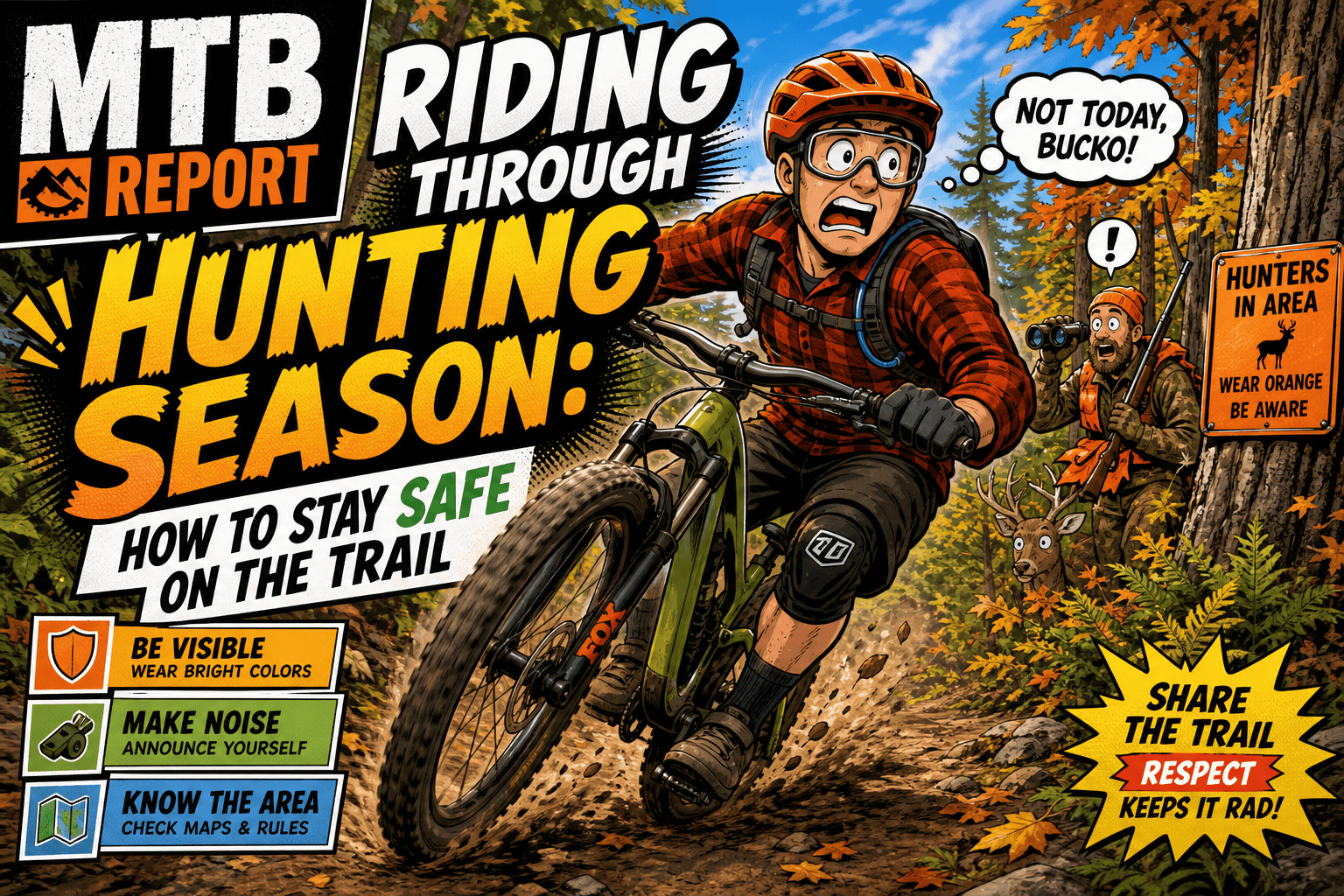
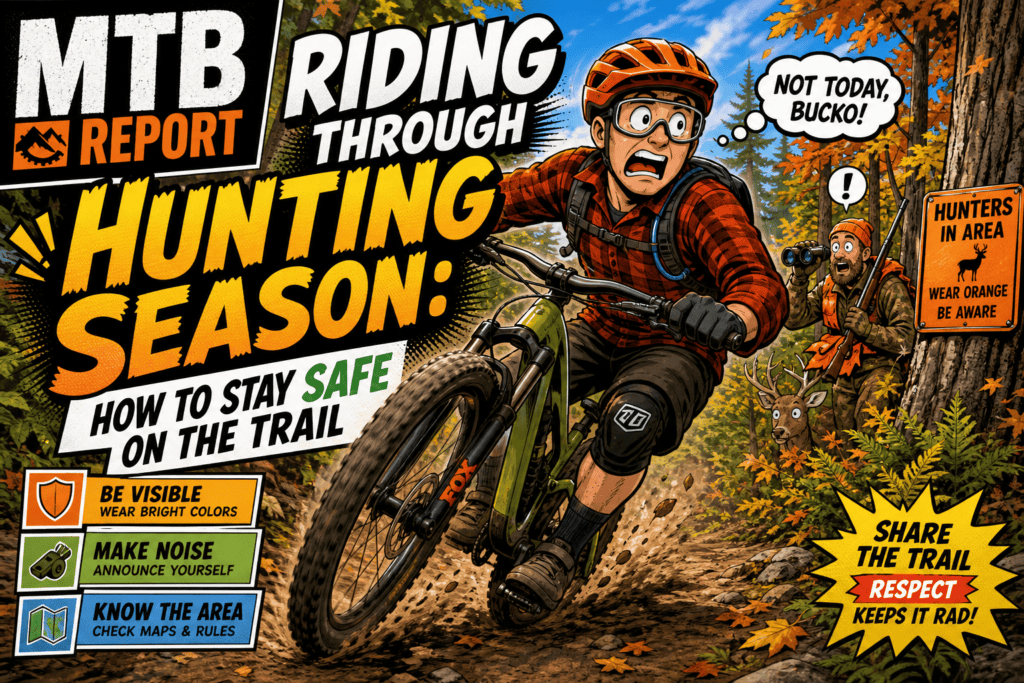
Brown, olive, gray, and black disappear in a fall forest. Blaze orange doesn’t. A vest over your jersey, an orange jacket, a bright helmet cover, or a pack cover costs little and weighs next to nothing. Hunters wear it for a reason: deer can’t distinguish orange from green and brown, but people can. Skip white, which can read as the flash of a whitetail’s tail, and remember that bright clothing reduces risk, it doesn’t erase it.
Ride the middle of the day
Dawn and dusk are prime time for deer and for the hunters waiting for them, and low light makes positive identification harder. That’s exactly when the Hopkinton shot happened. During firearm season, move your after-work lap to lunch or the weekend midday.
Know the calendar
Seasons and legal hours differ by state, by weapon, and by species. Your state wildlife agency posts them, and many national forest ranger districts post local notes. Trucks parked at trailheads before sunrise are another good hint.
Make noise
Silent riding is great the rest of the year. In hunting season, a bell on the bars helps, and if you hear shots or see hunters, call out. A human voice is the most reliable signal there is. If you stumble into an active hunt, stop on the trail, announce yourself, and let the hunter acknowledge you before moving on.
If something happens
If you’re shot at or someone points a firearm at you, get to safety, note your exact location, and call 911. Reporting it matters, even when nobody is hurt.
Heading to Europe this fall?
Hunting works differently across the Atlantic, and it’s worth knowing before your bucket-list trip. Instead of solo deer stands, much of Europe relies on driven hunts: beaters and dogs push game toward hunters posted along the edges of a forest block.
In Germany, those driven hunts peak from October through January, and „Achtung Jagd“ signs mark them. In France, watch for „chasse en cours“ signs, most often on weekends. In Italy, hunting is suspended by law on Tuesdays and Fridays, which makes those your best riding days. In several Spanish regions, a „Peligro: batida de caza“ sign can legally close the trail for the day. Our local editions cover each country in detail.
Our take
We’re not anti-hunting. Hunting license fees help fund a lot of the public land and wildlife work we benefit from, and most hunters are careful, ethical, and just as happy to see you in orange as you are to see them. What we want is simple: shared land that works for everyone. That means clear, easy-to-find season calendars, smart phase-ins like Pennsylvania’s park-by-park approach, and riders who take ten seconds to throw on a vest.
Build trails, share the woods, and wear the orange. Think radical, ride smart.
| A cheap orange vest is the best upgrade you’ll make all season. |
Published by Radical Life Studios / MTB Report
- Saalbach Hinterglemm: The Valley That Sport Brought Back to Life

- Riding Through Hunting Season: How to Stay Safe on the Trail
- The 4680 Cell Is Coming to E-Bikes. And It Will Turn Them Into Mopeds.
- Specialized Invented the Light Enduro eMTB — Then Walked Away. Orbea’s Picking It Up.
- Baby Blue on Pink: The Kit That Tells Tahnée Seagrave’s Whole Story
- The Enduro World Cup Is Dead and Whistler Just Became the Center of the Universe
- Austria Just Saved a Classic Trail. Now Let’s Talk About Us.
- The 750-Watt Line: Why DJI’s Avinox Has to Dumb Itself Down Just to Race
- Paganella Part 1: The New TOP GUN Trail & Why I Skipped Lake Garda | #MTBlife S04E13
- Accell’s Rescue Collapses: What Now for Raleigh, Haibike, Ghost and Lapierre
- Santa Cruz Blur 5 vs. Specialized Epic 9: The Pure XC Race Bike Is Dead — and Normal Riders Win (Sort Of)
- The Million-Dollar Trail Town – and the Ban That Nearly Killed the Model











No responses yet