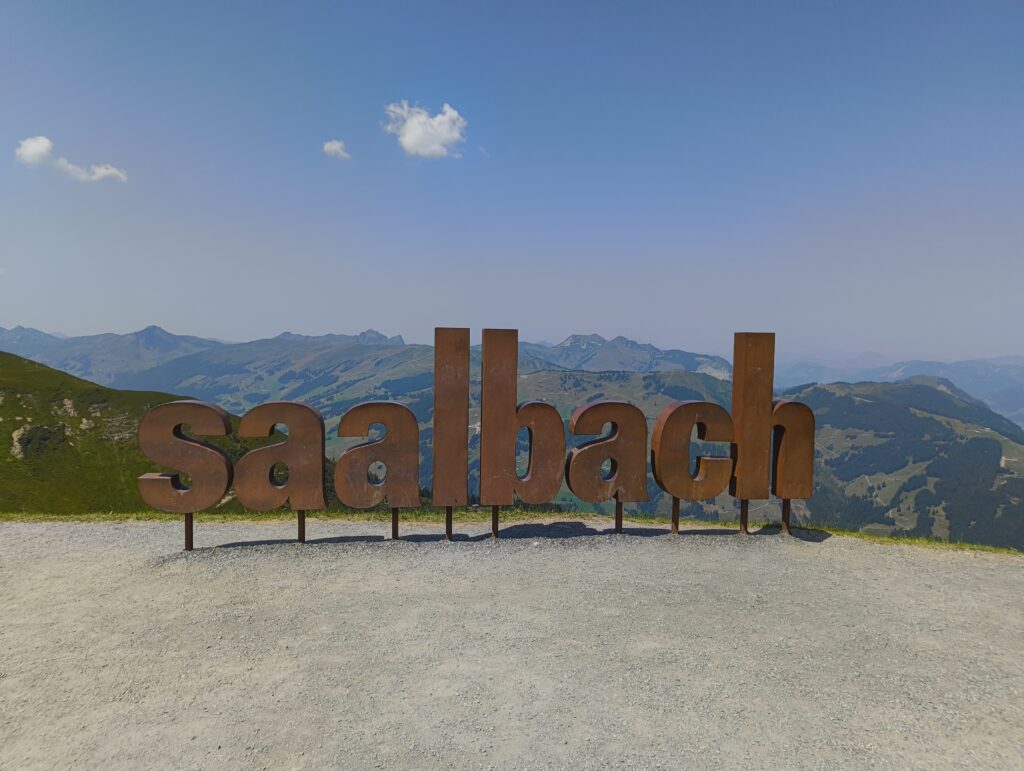
In Leogang they dug into the mountain. In Saalbach they rode it down. That single line sums up a story that runs from the poorest corner of the Salzburg region all the way to the Home of Lässig, Austria’s largest bike region. Our new #MTBlife episode rides straight through it. Here is the full picture, including everything the video had no room for.
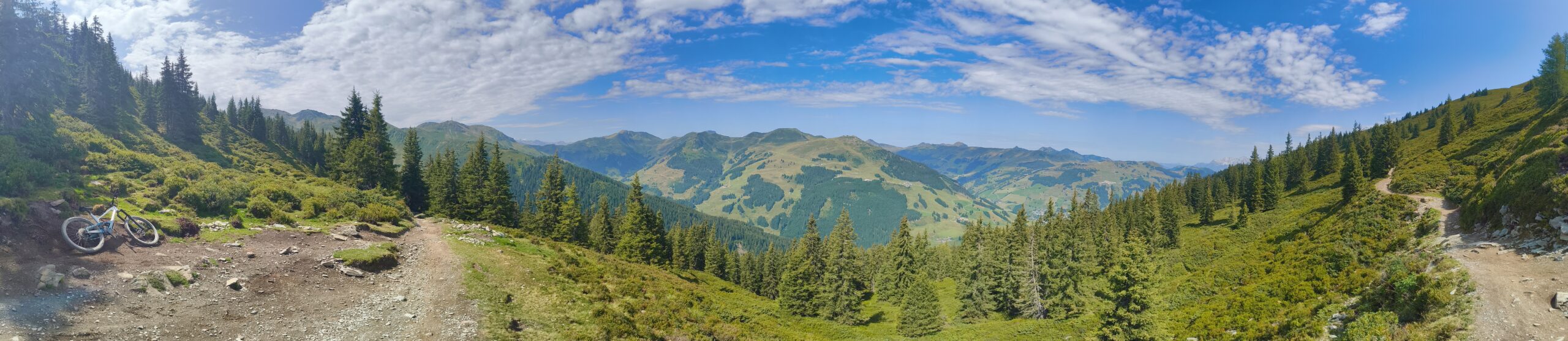
A story that is really our story
Saalbach is ancient. The first settlement is documented for 1222, and the name Salpach appears around 1350, simply taken from the creek running through the valley. Life here was brutally hard: steep slopes, high altitude, constant storms. The wider economic boom of the region passed the Glemm valley by completely.
People even tried mining, just like over in Leogang. There are old tunnels on the Gamshag and above the Pfefferalm, dug for copper ore. But unlike Leogang and nearby Viehhofen, mining in Saalbach was never a real success. Around 1707 it died out for good. The mountain here simply never gave up what was inside it.
Just how poor the valley was shows in one almost unbelievable detail. In 1906 the municipality declined to be included in a Munich travel album, on the grounds that, given the poverty, there was no interest in attracting visitors at all. A village so poor it did not even want to advertise itself.
The turning point did not come from the ground. It came from a piece of sports equipment. In 1898 Saalbach-born Josef Wallner returned home from Mürzzuschlag, one of the birthplaces of skiing in Austria. With him: his wife, his seventeen children and a pair of skis. A forgotten farming village became a world-famous resort. Saalbach went on to host the Alpine Ski World Championships twice, in 1991 and again in 2025, the last edition drawing around 175,000 fans into the valley.
And in summer the exact same principle carries on, only on two wheels instead of two boards. Saalbach did not grow rich from what was inside the mountain, but from the joy of riding it down. That is why one word is written on everything here: Home of Lässig.
Austria’s largest bike region
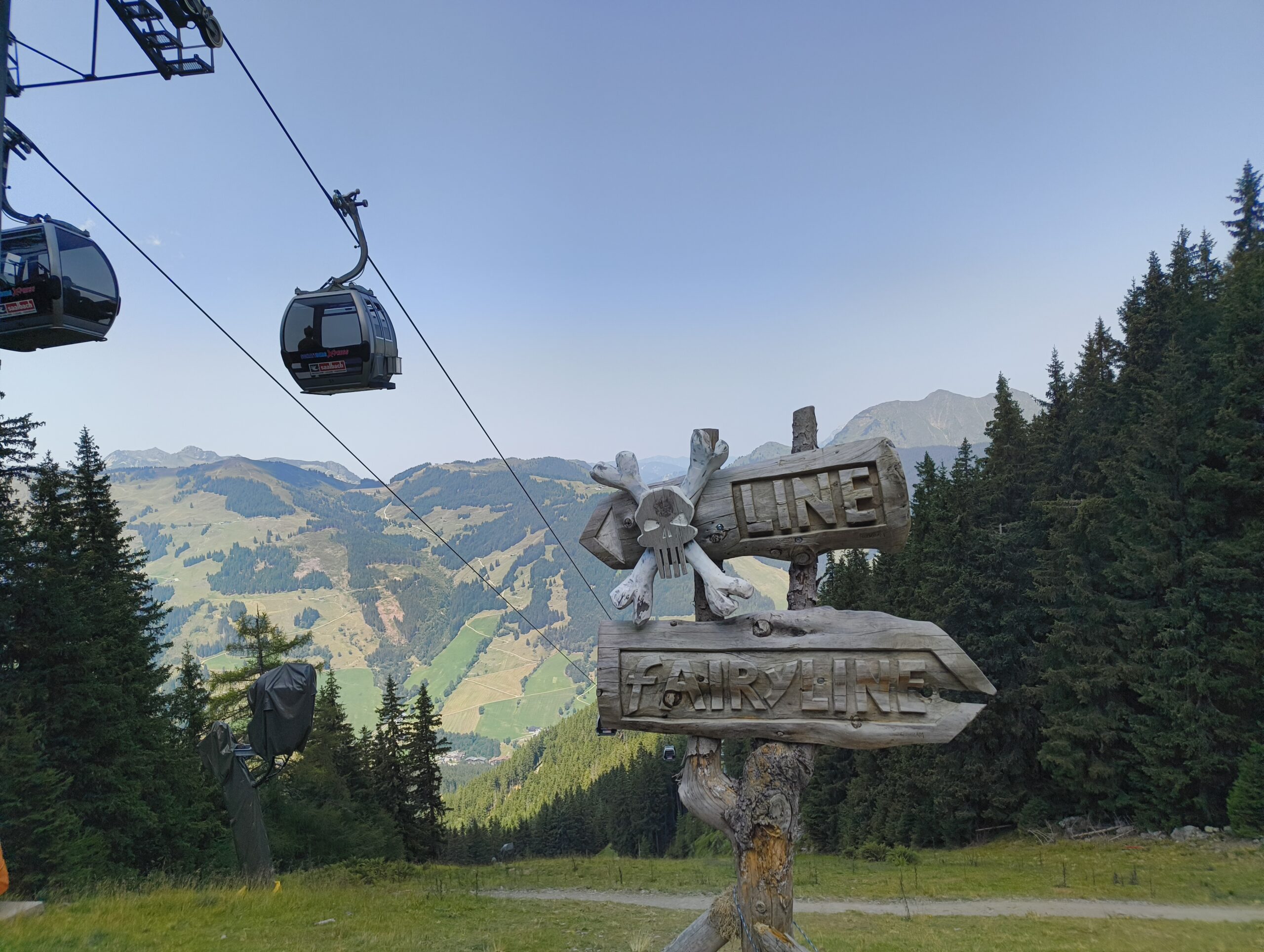
Today Saalbach Hinterglemm is the heart of Austria’s largest bike region. Together with the Epic Bikepark Leogang and the Streuböden bike area in Fieberbrunn, added in 2021, it forms a network where up to nine cable cars carry your bike, backed by more than 80 kilometres of lines and trails and hundreds of kilometres of touring and gravel routes. The biggest vertical drop on a single trail is 1,025 metres.
The key thing, and you feel it instantly in the episode, is that this is not a pure all-mountain area. The terrain loves enduro, freeride and downhill. If you want to point it downhill, you are in the right place.
The signature trails
The Hacklberg Trail is regarded as one of the oldest and finest natural trails in the whole Alps, the very definition of a flowing singletrail. Carefully extended over the years, but without losing its character. Riding it means riding a piece of Alpine MTB history, because Saalbach pioneered mountain biking in the Alps more than twenty years ago. You reach it via the Schattberg X-Press, a short section of the upper X-Line and then the Schattberg Sprinter up to the Westgipfel.
The X-Line on the Schattberg is the other extreme: black, over six kilometres, more than a thousand metres of descent in one go, making it one of the longest downhill and freeride tracks in Europe. Rock gardens, root carpets, north shore. For experienced riders on 160 millimetres of travel with downhill or enduro geometry.
In between sits a whole toolbox of red lines built purely for fun: the fAIRy-Line that seems to suck you straight in, the brand-new Bearly Legal as a style-heavy alternative to the black X-Line, the scenic Sheepy Hollow heading over toward the Schattberg, the gentle Buchegg Trail toward the Zwölferkogel and the technical Bergstadl Trail as the demanding sister of the Hacklberg. Hardcore downhillers also get the Pro Line with its integrated Evil Eye Trail.
The BIG-5 Bike Challenge
If you want it all, take the BIG-5 Bike Challenge: five mountains, six cable cars and around 5,000 metres of descent in a single day, mostly lift-assisted, with only a few metres to climb under your own power. Plan a full day for it and watch the lift operating hours. Important for 2026: the Reiterkogel cable car is being rebuilt in summer 2026, so that mountain is missing from the tour this season. You simply continue along the valley cycle path from Hinterglemm to Saalbach. From 2027 a modern Reiterkogel lift will run all the way to the summit.
Beginners welcome: work your way up
Here is the part that almost disappears between all the big trails in the episode, but it matters most for returners and beginners. Saalbach is not only relentless gravity. The motto here is literally to work your way up. At the base of the Kohlmais lift there is a Learn to Ride Park, plus pump tracks and skills areas. Good ways in are the Panorama-Line and Monti-Line on the Kohlmais, the 12er Sky-Line on the Zwölferkogel or the Buchegg-Line on the Westgipfel. You start small and build up trail by trail. Exactly as it should be.
New for 2026
For the 2026 season new trails are being built on the Schönleiten, the ScheeLeitn Line and the Wildenkaramba Line. In 2026 they are ridable first as an enduro and e-MTB variant, with the matching lift following from 2027. In other words, you can watch the region building its future in real time.
Prices, tickets and getting there
A regular bike day ticket costs around 66 euros. With the JokerCard you get a 20 percent discount on all bike tickets, and if you stay at a JokerCard partner property, two bike transports per day are included. Frequent riders crossing borders can use the Gravity Card, covering 32 bike parks in seven countries. The bike season runs roughly from late May to late October, with lifts usually opening around 9:00 and closing between 16:15 and 16:30 depending on the line. Always check current operating days before you travel, as each lift runs on its own schedule.
Arrive by car via the A10 and B311, with large paid parking areas at every valley station. Without a car, take the ÖBB train to Zell am See and continue on bus 260 into the valley. The nearest airports are Salzburg, Munich and Innsbruck. Several shops in the villages offer rentals and service.
More than just biking
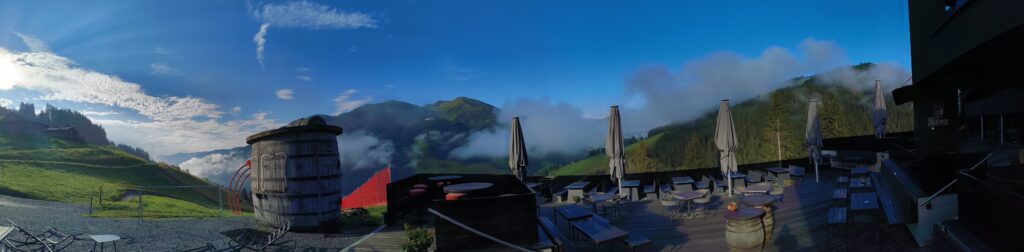
If you are not in the saddle around the clock, there is still plenty to do. Long-distance hikes such as the Seven Summits and the Home of Lässig Walk cross the peaks, alongside summit playgrounds and the Pinzgauer Spaziergang. Families are well served with Berg Kodok, Montelino’s adventure trail, the Käpt’n Hook adventure pool, the valley-head train and the treetop walk with the Golden Gate of the Alps suspension bridge. And in winter the valley shows its other face: the Skicircus Saalbach Hinterglemm Leogang Fieberbrunn ranks among Austria’s largest ski areas, a two-time Ski World Championship host. The very heritage that once saved the place.
The takeaway
Saalbach is living proof that sport can reinvent an entire valley. And it still does, run after run. In our #MTBlife episode S04E19 we take you along for exactly that journey, with all the highs, a few lows and the one feeling this mountain hands you: reborn.
Real Ride. Real Talk. Real Life.
Published by Radical Life Studios / MTB Report
- Saalbach Hinterglemm: The Valley That Sport Brought Back to Life

- Riding Through Hunting Season: How to Stay Safe on the Trail
- The 4680 Cell Is Coming to E-Bikes. And It Will Turn Them Into Mopeds.
- Specialized Invented the Light Enduro eMTB — Then Walked Away. Orbea’s Picking It Up.
- Baby Blue on Pink: The Kit That Tells Tahnée Seagrave’s Whole Story
- The Enduro World Cup Is Dead and Whistler Just Became the Center of the Universe
- Austria Just Saved a Classic Trail. Now Let’s Talk About Us.
- The 750-Watt Line: Why DJI’s Avinox Has to Dumb Itself Down Just to Race
- Paganella Part 1: The New TOP GUN Trail & Why I Skipped Lake Garda | #MTBlife S04E13
- Accell’s Rescue Collapses: What Now for Raleigh, Haibike, Ghost and Lapierre
- Santa Cruz Blur 5 vs. Specialized Epic 9: The Pure XC Race Bike Is Dead — and Normal Riders Win (Sort Of)
- The Million-Dollar Trail Town – and the Ban That Nearly Killed the Model







No responses yet